Sunday, August 5, 2007

Measure Fitness By Body Fat Percentage

Because your body is about 50-55% water, you can temporarily stage-manage your weight with diet pills and fad diets but, you cannot manipulate your body fat percentage. Body fat percentage is a more meaningful metric for gauging physical fitness than what you can get out of height and weight tables.

The U.S. Army established a maximum allowable body fat percentage standard that applies to everybody from recruit to four-star general. Failure to meet the body fat percentage standard means no promotions and no career training. Repeated failure to meet the standard will result in an early exit from the Army. That's a harsh result.

At least with the Army people know what to expect as a consequence of ignoring their own physical fitness. The world we all live in may not be as honest as the Army in defining those consequences but, the results may be as unkind.

Excessive body fat connotes a lack of personal discipline and can lead to low self-esteem. It detracts from appearance and suggests a poor state of health, physical fitness or stamina. That is what researchers found from measuring the responses of people to photos of different body types.

The maximum allowable body fat percentages for everybody in the U.S. Army are shown below. Chances are you are not in the military and never intend to be but, can you suggest a more thoroughly researched or carefully crafted standard?

Maximum allowable body fat percentages are categorized by age and gender. For males this is the breakdown:

Age 17 - 20: Max Body Fat is 20% Age 21 - 27: Max Body Fat is 22% Age 28 - 39:. Max Body Fat is 24% Age 40 and over: Max Body Fat is 26%

And for females:

Age 17 - 20: Max Body Fat is 28% Age 21 - 27: Max Body Fat is 30% Age 28 - 39:. Max Body Fat is 32% Age 40 and over: Max Body Fat is 34%

It's fair to say that knowing your body fat percentage is a necessary first step to getting fit and trim. Because your body is about 55-60% water, you can stage-manage your weight with diet pills and fad diets but, you cannot manipulate body fat percentage.

Consider making your physical fitness goal to get your body fat percentage in line with the U.S. Army standard for the maximum allowable body fat percentage for your age and gender. Once you get there you will have accomplished something meaningful and made physical fitness a positive habit. You will be able to take your body-building and fitness ambitions anywhere you want to go.

Fortunately determining your body fat percentage is easy. If you cannot or do not want to get it done at a gym or anywhere else other than privately there are new devices that measure body fat weight and percentage in seconds, at the push of a button. The readings as accurate as you would get at the gym or the doctor's office.
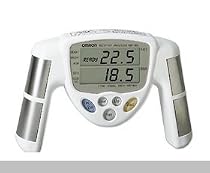


Body Fat Analyzer #HBF-306 by Omron


The Omron HBF-306 Body Logic measures your body fat weight and percentage in seconds, at the push of a button. This is accomplished with clinically proven accuracy, with the help of Biolectrical Impedance (BI). BI is a widely accepted method for measuring body fat levels, both at the surface and between the body's organs. This internal fat is often overlooked by surface testing methods but can play an important role with other measurements of wellness. Athlete mode for accurate results with those in training.

List Price: $79.95
Amazon Price: $33.95


Body Mass Index (BMI) is a number calculated from a person's weight and height. BMI is used for creating statistics from large groups of people and in that role is considered a reliable indicator of body fat percentage for an entire population. You're a population of one. Get the body fat analyzer.

lean-and-mean.net offers many helpful fitness articles and fitness equipment reviews.

Phase Into Fitness Training

A physical fitness training program is divided into three phases: preparatory, conditioning, and maintenance. The starting phase for different individuals will vary depending on their age, fitness levels, and previous physical activity.

Young, healthy persons may be able to jump right into the conditioning phase, while those who have been exercising regularly may already be in the maintenance phase. Factors such as extended inactivity, injury or illness can drop you from a maintenance to a conditioning phase.

Persons who have not been active, especially if you are age 40 or older, should start with the preparatory phase. The preparatory phase helps both the cardiorespiratory and muscular systems get used to exercise, preparing the body to handle the conditioning phase.

The work load in the beginning must be moderate. Progression from a lower to a higher level of fitness should be achieved by gradual, planned increases in frequency, intensity, and time.

Preparatory Phase

The preparatory phase helps both the cardiorespiratory and muscular systems get used to exercise, preparing the body to handle the conditioning phase. The work load in the beginning must be moderate. Progression from a lower to a higher level of fitness should be achieved by gradual, planned increases in frequency, intensity, and time.

Initially, poorly conditioned persons should run or, walk if need be, three times a week at a comfortable pace that moderately elevates their heart rate for 10 to 15 minutes. Continue at this until you have no undue fatigue or muscle soreness the day following the exercise. After that you can lengthen the exercise session to 16 to 20 minutes and/or elevate your heart rate by increasing the pace. If you feel breathless slow down to a walk.


Easy Spirit Women's Traveltime Mule

Easy Spirit's Traveltime mules for women feature sporty perforated mesh and leather uppers, molded rubber out-soles and lightly padded in-soles in a conveniently styled mule sneaker. Wear these sporty shoes when you're on the go and need some extra comfort and convenience.


The preparatory phase for improving muscular endurance and strength through weight training should start easily and progress gradually. Beginning weight trainers should select about 8 to 12 exercises that work all the body's major muscle groups. You should use only very light weights the first week (that is, the first two to three workouts). This is very important, as you must first learn the proper form for each exercise.

Light weights will also help minimize muscle soreness and decrease the likelihood of injury to the muscles, joints, and ligaments. During the second week, you should use progressively heavier weights on each resistance exercise. By the end of the second week (four to six workouts), you should know how much weight will let you do 8 to 12 repetitions to muscle failure for each exercise. At this point the conditioning phase begins.

Conditioning Phase

To reach the desired level of fitness, you must increase the amount of exercise and/or the workout intensity as your strength and/or endurance increases. To improve cardiorespiratory endurance, for example, you must increase the length of time you run. You should start with the preparatory phase and gradually increase the running time by one or two minutes each week until you can run continuously for 20 to 30 minutes. At this point, you can increase the intensity until you reach the desired level of fitness.

You should train at least three times a week and take no more than two days between workouts. For weight trainers, the conditioning phase normally begins during the third week. You should do one set of 8 to 12 repetitions for each of the selected resistance exercises. When you can do more than 12 repetitions of any exercise, you should increase the weight used on that exercise by about five percent so you can again do only 8 to 12 repetitions.

This process continues throughout the conditioning phase. As long as you continue to progress and get stronger while doing only one set of each exercise, it is not necessary for you to do more than one set per exercise. When you stop making progress with one set, you should add another set on those exercises in which progress has slowed. As training progresses, you may want to increase the sets to three to help promote further increases in strength and/ or muscle mass.

For maximum benefit, you should do strength training three times a week with 48 hours of rest between workouts for any given muscle group. It helps to periodically do a different type of exercise for a given muscle or muscle group. This adds variety and ensures better strength development. The conditioning phase ends when all personal, strength-related goals have been met.

Maintenance Phase

The maintenance phase sustains the high level of fitness achieved in the conditioning phase. The emphasis here is no longer on progression. A well designed, 45- to 60-minute workout (including warm-up and cool-down) at the right intensity three times a week is enough to maintain almost any appropriate level of physical fitness. These workouts give you time to stabilize your flexibility, cardiorespiratory endurance, and muscular endurance and strength. However, more frequent training may be needed to reach and maintain peak fitness levels.

Of course, once you get to this level, maintaining an optimal level of fitness should become part of your life-style and should be continued for life.

Home Exercise Equipment Reviews and Shopping Guide

5 Components of Physical Fitness

Physical fitness is the ability to function effectively throughout your workday, perform your usual other activities and still have enough energy left over to handle any extra stresses or emergencies which may arise.

There are five components of physical fitness:

* Cardiorespiratory (CR) endurance - the efficiency with which the body delivers oxygen and nutrients needed for muscular activity and transports waste products from the cells.

* Muscular strength - the greatest amount of force a muscle or muscle group can exert in a single effort.

* Muscular endurance - the ability of a muscle or muscle group to perform repeated movements with a sub-maximal force for extended periods of times.

* Flexibility - the ability to move the joints or any group of joints through an entire, normal range of motion.

* Body composition - the percentage of body fat a person has in comparison to his or her total body mass.

Improving the first three components of fitness listed above will have a positive impact on body composition and will result in less fat. Excessive body fat detracts from the other fitness components, reduces performance, detracts from appearance, and negatively affects your health.

Factors such as speed, agility, muscle power, eye-hand coordination, and eye-foot coordination are classified as components of "motor" fitness. These factors most affect your athletic ability. Appropriate training can improve these factors within the limits of your potential. A sensible weight loss and fitness program seeks to improve or maintain all the components of physical and motor fitness through sound, progressive, mission specific physical training.

Principles of Exercise

Adherence to certain basic exercise principles is important for developing an effective program. The same principles of exercise apply to everyone at all levels of physical training, from the Olympic-caliber athlete to the weekend jogger.

These basic principles of exercise must be followed.

Regularity
To achieve a training effect, you must exercise often. You should exercise each of the first four fitness components at least three times a week. Infrequent exercise can do more harm than good. Regularity is also important in resting, sleeping, and following a sensible diet.

Progression
The intensity (how hard) and/or duration (how long) of exercise must gradually increase to improve the level of fitness.

Balance
To be effective, a program should include activities that address all the fitness components, since overemphasizing any one of them may hurt the others.

Variety
Providing a variety of activities reduces boredom and increases motivation and progress.

Specificity
Training must be geared toward specific goals. For example, people become better runners if their training emphasizes running. Although swimming is great exercise, it does not improve a 2-mile-run time as much as a running program does.

Recovery
A hard day of training for a given component of fitness should be followed by an easier training day or rest day for that component and/or muscle group(s) to help permit recovery. Another way to allow recovery is to alternate the muscle groups exercised every other day, especially when training for strength and/or muscle endurance.

Overload
The work load of each exercise session must exceed the normal demands placed on the body in order to bring about a training effect.

lean-and-mean.net offers fitness equipment reviews and articles about aerobic exercise equipment.