Sole F80 Folding Treadmill | Lean and Mean: "The Sole Fitness F80 treadmill has been reviewed as “One of the best value treadmills in its price range”. The F80 treadmill steps up to the Cushion Flex Whisper Deck running surface, shown in a study to reduce impact by 365% compared to running on asphalt. The strong, 2.5 Cont. Duty HP motor delivers challenging speeds up to 11 mph and inclines up to 15%. And when not in use, the treadmill deck safely locks into place, 100% secured. Sole’s folding treadmill frame design originated as a hotel treadmill - as mobile as a room service cart, yet still stable and powerful."
More Sole treadmills ...
Tuesday, August 21, 2007

Sunday, August 19, 2007
reppertus » Blog Archive » Smooth CE Elliptical
reppertus » Blog Archive » Smooth CE Elliptical: "The Smooth CE 7.4 elliptical cross trainer is a built for those who take health and fitness seriously. It offers all the “features that count” and more. Plus, with its extra-heavy, welded steel double frame the CE 7.4 supports a remarkable 350 pounds - as much or more than most commercial units."
Saturday, August 18, 2007
Lean and Mean » Calorie Expenditure Chart
Lean and Mean » Calorie Expenditure Chart: "This table will help you figure out how many calories you burn per minute or hour for any given physical activity. We have highlighted the stationary run and the 10 minute mile because putting your feet on the ground is an easy reference point. Note that an essential variable in the amount of calories burned is your body weight. Heavier people burn more calories for the same activity and intensity."
Friday, August 17, 2007
Lean and Mean » Plus Size Workout Pants
Lean and Mean » Plus Size Workout Pants: "The Danskin Plus Size Supplex Lycra capri pants are cut to fall just above your ankle, and are constructed with Supplex nylon and Lycra spandex for an exceptional fit and superior comfort. The CoolMax gusset provides you with moisture-managing performance."
Lean and Mean » Free Weight Equipment
Lean and Mean » Free Weight Equipment: "Free weights with a simple program of free weight exercises deliver direct results on two of the components and contribute to body composition by burning fat and replacing it with muscle. It is intuitive that weight lifting will increase muscular strength but it may not be as intuitive that to actually achieve a training effect you must exercise three times a week and gradually increase the intensity and duration of your workout on a continuous basis."
Thursday, August 16, 2007
Lean and Mean » Bowflex Dumbbells
Lean and Mean » Bowflex Dumbbells: "If you want to get a good strength workout at home, but don’t have much space, the Bowflex 552 SelectTech Dumbbells are an ideal solution. The 552 SelectTech Dumbbells combine 15 sets of weights into one using a unique dial system. It’s one of the most space-efficient and flexible strength-training options available. Say goodbye to 16 different dumbbells cluttering your workout space. With just the turn of a dial, you can automatically change your resistance on each dumbbell from 5 pounds all the way up to 52.5 pounds of weight. It adjusts in 2.5-pound increments (up to 25 pounds), enabling you to gradually increase your strength without bulking up."
Home Fitness Equipment
Home Fitness Equipment
Thursday, August 9, 2007
Treadmill Fitness Should Be Cheap Not Easy
You want to start an effective cardiovascular fitness program but you are put off by the high cost of personal trainers, club memberships, and fancy exercise equipment. You could always get a pair of properly fitted running shoes and hit the pavement, but that is impractical for many.
Even if cost were not a concern there are always the questions about how much and how hard you have to workout to get a positive training effect. Complicate your training effect questions with your desire to sensibly lose 20 or 30 pounds in a reasonable amount of time, and your fitness and weight loss program becomes either expensive or hit and miss. There is nothing more discouraging to continuing a fitness program than doing the work and not getting the result.
Here is a specific plan for an effective cardio fitness and weight loss program that will cost you from nothing to a couple hundred dollars, and that provides you with the specific information you need you know about "how much" and "how hard."
The plan includes a manual treadmill that sells new for between $100 and $200. I assume you have a watch or a clock with a second hand, so if you want to go for a no cost program you can dump the manual treadmill and substitute running in place, or jumping rope if you want. The equipment is not critical. You exercise your body after all, not the equipment. By the same token if you already have a motorized treadmill that works too.
Your ability to monitor your heart rate is the key to success in cardiovascular training. Your heart before and during exercise will tell you exactly how hard you have to train to get a beneficial training effect. Generally, any activity that works the large muscle groups (legs) continuously for 20 minutes or longer can produce some effect.
But why generalize or guess when you can know for sure what heart rate, within a few beats per minute, you need to maintain during exercise. This specific heart rate is called appropriately your Training Heart Rate (THR), and it varies by age and physical condition.
Here is the quick formula to determine your THR in beats-per-minute. Subtract your age from 220. Call the answer your MHR (maximum heart rate). If you are in excellent physical shape your Training Heart Rate is 90% of your MHR; in good physical shape 80% of MHR; and if in poor shape 70% of your MHR. If you feel any discomfort exercising at 60% of your MHR then stop and go get a complete medically supervised physical exam. Exercising at less than 60% of your MHR would have almost zero cardiovascular training effect anyway so why take the risk.
You can go with an electronic heart rate monitor, or you can take your own pulse to get your heart rate. Do not take your pulse until five minutes after beginning your aerobic exercise. You can put your hand over your heart, or the tips of your fingers on the radial artery, which is on the wrist just above your thumb. Count your pulse for 10 seconds and multiply by six to determine your heart rate in beats-per-minute. You can pick up the pace or slow down to get to your THR. Exercising at more than 90% of THR can be dangerous.
Here is another simple and accurate formula to determine how much exercise you have to do to lose weight. This assumes no change in your normal diet or weekly caloric consumption. 1 pound of fat = 3,500 calories. To burn 2 pounds of fat per week (a realistic and sensible goal) you must burn an above-normal 7,000 calories of energy per week.
Picking up and putting down your feet on the treadmill at about 75 counts per minute burns .078 Calories/Minute/Pound of Body Weight, or more easily remembered, 7.8 calories per minute, or 468 calories per hour, per 100 pounds of body weight.
A 200 pound person would require about 7 1/2 hours per week of exercise that put their feet on the treadmill 75 times per minute. Use this formula to convert for your situation:
(Your Body Weight/100) * 468 * (Steps Per Minute/75) = Calories Per Hour. Divide 7,000 by the Calories Per Hour figure and that is how many hours of exercise per week you must do to lose 2 pounds of body fat.
You can play with the number of hours of exercise per week by changing the steps per minute or by changing your caloric consumption per week. Make sure that you get your heart rate to THR for 20 minutes during three sessions, and you know for a scientific fact that by continuing your program you will accomplish your cardio fitness and weight loss goals.
Home Fitness Equipment Reviews
Even if cost were not a concern there are always the questions about how much and how hard you have to workout to get a positive training effect. Complicate your training effect questions with your desire to sensibly lose 20 or 30 pounds in a reasonable amount of time, and your fitness and weight loss program becomes either expensive or hit and miss. There is nothing more discouraging to continuing a fitness program than doing the work and not getting the result.
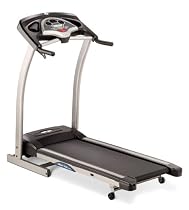 | Merit 710T Treadmill Features Folding treadmill with 1.25 horsepower continuous duty motor Speed range of 1.5 to 10 miles per hour, 0 to 1.75 percent incline Four preset programs, two cup holders, thumb contact heart rate monitor Weight capacity of 250 pounds Five-year frame warranty, one year for the motor |
Here is a specific plan for an effective cardio fitness and weight loss program that will cost you from nothing to a couple hundred dollars, and that provides you with the specific information you need you know about "how much" and "how hard."
The plan includes a manual treadmill that sells new for between $100 and $200. I assume you have a watch or a clock with a second hand, so if you want to go for a no cost program you can dump the manual treadmill and substitute running in place, or jumping rope if you want. The equipment is not critical. You exercise your body after all, not the equipment. By the same token if you already have a motorized treadmill that works too.
Your ability to monitor your heart rate is the key to success in cardiovascular training. Your heart before and during exercise will tell you exactly how hard you have to train to get a beneficial training effect. Generally, any activity that works the large muscle groups (legs) continuously for 20 minutes or longer can produce some effect.
But why generalize or guess when you can know for sure what heart rate, within a few beats per minute, you need to maintain during exercise. This specific heart rate is called appropriately your Training Heart Rate (THR), and it varies by age and physical condition.
Here is the quick formula to determine your THR in beats-per-minute. Subtract your age from 220. Call the answer your MHR (maximum heart rate). If you are in excellent physical shape your Training Heart Rate is 90% of your MHR; in good physical shape 80% of MHR; and if in poor shape 70% of your MHR. If you feel any discomfort exercising at 60% of your MHR then stop and go get a complete medically supervised physical exam. Exercising at less than 60% of your MHR would have almost zero cardiovascular training effect anyway so why take the risk.
You can go with an electronic heart rate monitor, or you can take your own pulse to get your heart rate. Do not take your pulse until five minutes after beginning your aerobic exercise. You can put your hand over your heart, or the tips of your fingers on the radial artery, which is on the wrist just above your thumb. Count your pulse for 10 seconds and multiply by six to determine your heart rate in beats-per-minute. You can pick up the pace or slow down to get to your THR. Exercising at more than 90% of THR can be dangerous.
Here is another simple and accurate formula to determine how much exercise you have to do to lose weight. This assumes no change in your normal diet or weekly caloric consumption. 1 pound of fat = 3,500 calories. To burn 2 pounds of fat per week (a realistic and sensible goal) you must burn an above-normal 7,000 calories of energy per week.
Picking up and putting down your feet on the treadmill at about 75 counts per minute burns .078 Calories/Minute/Pound of Body Weight, or more easily remembered, 7.8 calories per minute, or 468 calories per hour, per 100 pounds of body weight.
A 200 pound person would require about 7 1/2 hours per week of exercise that put their feet on the treadmill 75 times per minute. Use this formula to convert for your situation:
(Your Body Weight/100) * 468 * (Steps Per Minute/75) = Calories Per Hour. Divide 7,000 by the Calories Per Hour figure and that is how many hours of exercise per week you must do to lose 2 pounds of body fat.
You can play with the number of hours of exercise per week by changing the steps per minute or by changing your caloric consumption per week. Make sure that you get your heart rate to THR for 20 minutes during three sessions, and you know for a scientific fact that by continuing your program you will accomplish your cardio fitness and weight loss goals.
Home Fitness Equipment Reviews
Sunday, August 5, 2007
Measure Fitness By Body Fat Percentage
Because your body is about 50-55% water, you can temporarily stage-manage your weight with diet pills and fad diets but, you cannot manipulate your body fat percentage. Body fat percentage is a more meaningful metric for gauging physical fitness than what you can get out of height and weight tables.
The U.S. Army established a maximum allowable body fat percentage standard that applies to everybody from recruit to four-star general. Failure to meet the body fat percentage standard means no promotions and no career training. Repeated failure to meet the standard will result in an early exit from the Army. That's a harsh result.
At least with the Army people know what to expect as a consequence of ignoring their own physical fitness. The world we all live in may not be as honest as the Army in defining those consequences but, the results may be as unkind.
Excessive body fat connotes a lack of personal discipline and can lead to low self-esteem. It detracts from appearance and suggests a poor state of health, physical fitness or stamina. That is what researchers found from measuring the responses of people to photos of different body types.
The maximum allowable body fat percentages for everybody in the U.S. Army are shown below. Chances are you are not in the military and never intend to be but, can you suggest a more thoroughly researched or carefully crafted standard?
Maximum allowable body fat percentages are categorized by age and gender. For males this is the breakdown:
Age 17 - 20: Max Body Fat is 20% Age 21 - 27: Max Body Fat is 22% Age 28 - 39:. Max Body Fat is 24% Age 40 and over: Max Body Fat is 26%
And for females:
Age 17 - 20: Max Body Fat is 28% Age 21 - 27: Max Body Fat is 30% Age 28 - 39:. Max Body Fat is 32% Age 40 and over: Max Body Fat is 34%
It's fair to say that knowing your body fat percentage is a necessary first step to getting fit and trim. Because your body is about 55-60% water, you can stage-manage your weight with diet pills and fad diets but, you cannot manipulate body fat percentage.
Consider making your physical fitness goal to get your body fat percentage in line with the U.S. Army standard for the maximum allowable body fat percentage for your age and gender. Once you get there you will have accomplished something meaningful and made physical fitness a positive habit. You will be able to take your body-building and fitness ambitions anywhere you want to go.
Fortunately determining your body fat percentage is easy. If you cannot or do not want to get it done at a gym or anywhere else other than privately there are new devices that measure body fat weight and percentage in seconds, at the push of a button. The readings as accurate as you would get at the gym or the doctor's office.
Body Mass Index (BMI) is a number calculated from a person's weight and height. BMI is used for creating statistics from large groups of people and in that role is considered a reliable indicator of body fat percentage for an entire population. You're a population of one. Get the body fat analyzer.
lean-and-mean.net offers many helpful fitness articles and fitness equipment reviews.
The U.S. Army established a maximum allowable body fat percentage standard that applies to everybody from recruit to four-star general. Failure to meet the body fat percentage standard means no promotions and no career training. Repeated failure to meet the standard will result in an early exit from the Army. That's a harsh result.
At least with the Army people know what to expect as a consequence of ignoring their own physical fitness. The world we all live in may not be as honest as the Army in defining those consequences but, the results may be as unkind.
Excessive body fat connotes a lack of personal discipline and can lead to low self-esteem. It detracts from appearance and suggests a poor state of health, physical fitness or stamina. That is what researchers found from measuring the responses of people to photos of different body types.
The maximum allowable body fat percentages for everybody in the U.S. Army are shown below. Chances are you are not in the military and never intend to be but, can you suggest a more thoroughly researched or carefully crafted standard?
Maximum allowable body fat percentages are categorized by age and gender. For males this is the breakdown:
Age 17 - 20: Max Body Fat is 20% Age 21 - 27: Max Body Fat is 22% Age 28 - 39:. Max Body Fat is 24% Age 40 and over: Max Body Fat is 26%
And for females:
Age 17 - 20: Max Body Fat is 28% Age 21 - 27: Max Body Fat is 30% Age 28 - 39:. Max Body Fat is 32% Age 40 and over: Max Body Fat is 34%
It's fair to say that knowing your body fat percentage is a necessary first step to getting fit and trim. Because your body is about 55-60% water, you can stage-manage your weight with diet pills and fad diets but, you cannot manipulate body fat percentage.
Consider making your physical fitness goal to get your body fat percentage in line with the U.S. Army standard for the maximum allowable body fat percentage for your age and gender. Once you get there you will have accomplished something meaningful and made physical fitness a positive habit. You will be able to take your body-building and fitness ambitions anywhere you want to go.
Fortunately determining your body fat percentage is easy. If you cannot or do not want to get it done at a gym or anywhere else other than privately there are new devices that measure body fat weight and percentage in seconds, at the push of a button. The readings as accurate as you would get at the gym or the doctor's office.
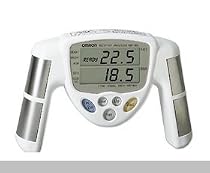 | Body Fat Analyzer #HBF-306 by Omron The Omron HBF-306 Body Logic measures your body fat weight and percentage in seconds, at the push of a button. This is accomplished with clinically proven accuracy, with the help of Biolectrical Impedance (BI). BI is a widely accepted method for measuring body fat levels, both at the surface and between the body's organs. This internal fat is often overlooked by surface testing methods but can play an important role with other measurements of wellness. Athlete mode for accurate results with those in training. List Price: $79.95 Amazon Price: $33.95 |
Body Mass Index (BMI) is a number calculated from a person's weight and height. BMI is used for creating statistics from large groups of people and in that role is considered a reliable indicator of body fat percentage for an entire population. You're a population of one. Get the body fat analyzer.
lean-and-mean.net offers many helpful fitness articles and fitness equipment reviews.
Phase Into Fitness Training
A physical fitness training program is divided into three phases: preparatory, conditioning, and maintenance. The starting phase for different individuals will vary depending on their age, fitness levels, and previous physical activity.
Young, healthy persons may be able to jump right into the conditioning phase, while those who have been exercising regularly may already be in the maintenance phase. Factors such as extended inactivity, injury or illness can drop you from a maintenance to a conditioning phase.
Persons who have not been active, especially if you are age 40 or older, should start with the preparatory phase. The preparatory phase helps both the cardiorespiratory and muscular systems get used to exercise, preparing the body to handle the conditioning phase.
The work load in the beginning must be moderate. Progression from a lower to a higher level of fitness should be achieved by gradual, planned increases in frequency, intensity, and time.
Preparatory Phase
The preparatory phase helps both the cardiorespiratory and muscular systems get used to exercise, preparing the body to handle the conditioning phase. The work load in the beginning must be moderate. Progression from a lower to a higher level of fitness should be achieved by gradual, planned increases in frequency, intensity, and time.
Initially, poorly conditioned persons should run or, walk if need be, three times a week at a comfortable pace that moderately elevates their heart rate for 10 to 15 minutes. Continue at this until you have no undue fatigue or muscle soreness the day following the exercise. After that you can lengthen the exercise session to 16 to 20 minutes and/or elevate your heart rate by increasing the pace. If you feel breathless slow down to a walk.
The preparatory phase for improving muscular endurance and strength through weight training should start easily and progress gradually. Beginning weight trainers should select about 8 to 12 exercises that work all the body's major muscle groups. You should use only very light weights the first week (that is, the first two to three workouts). This is very important, as you must first learn the proper form for each exercise.
Light weights will also help minimize muscle soreness and decrease the likelihood of injury to the muscles, joints, and ligaments. During the second week, you should use progressively heavier weights on each resistance exercise. By the end of the second week (four to six workouts), you should know how much weight will let you do 8 to 12 repetitions to muscle failure for each exercise. At this point the conditioning phase begins.
Conditioning Phase
To reach the desired level of fitness, you must increase the amount of exercise and/or the workout intensity as your strength and/or endurance increases. To improve cardiorespiratory endurance, for example, you must increase the length of time you run. You should start with the preparatory phase and gradually increase the running time by one or two minutes each week until you can run continuously for 20 to 30 minutes. At this point, you can increase the intensity until you reach the desired level of fitness.
You should train at least three times a week and take no more than two days between workouts. For weight trainers, the conditioning phase normally begins during the third week. You should do one set of 8 to 12 repetitions for each of the selected resistance exercises. When you can do more than 12 repetitions of any exercise, you should increase the weight used on that exercise by about five percent so you can again do only 8 to 12 repetitions.
This process continues throughout the conditioning phase. As long as you continue to progress and get stronger while doing only one set of each exercise, it is not necessary for you to do more than one set per exercise. When you stop making progress with one set, you should add another set on those exercises in which progress has slowed. As training progresses, you may want to increase the sets to three to help promote further increases in strength and/ or muscle mass.
For maximum benefit, you should do strength training three times a week with 48 hours of rest between workouts for any given muscle group. It helps to periodically do a different type of exercise for a given muscle or muscle group. This adds variety and ensures better strength development. The conditioning phase ends when all personal, strength-related goals have been met.
Maintenance Phase
The maintenance phase sustains the high level of fitness achieved in the conditioning phase. The emphasis here is no longer on progression. A well designed, 45- to 60-minute workout (including warm-up and cool-down) at the right intensity three times a week is enough to maintain almost any appropriate level of physical fitness. These workouts give you time to stabilize your flexibility, cardiorespiratory endurance, and muscular endurance and strength. However, more frequent training may be needed to reach and maintain peak fitness levels.
Of course, once you get to this level, maintaining an optimal level of fitness should become part of your life-style and should be continued for life.
Home Exercise Equipment Reviews and Shopping Guide
Young, healthy persons may be able to jump right into the conditioning phase, while those who have been exercising regularly may already be in the maintenance phase. Factors such as extended inactivity, injury or illness can drop you from a maintenance to a conditioning phase.
Persons who have not been active, especially if you are age 40 or older, should start with the preparatory phase. The preparatory phase helps both the cardiorespiratory and muscular systems get used to exercise, preparing the body to handle the conditioning phase.
The work load in the beginning must be moderate. Progression from a lower to a higher level of fitness should be achieved by gradual, planned increases in frequency, intensity, and time.
Preparatory Phase
The preparatory phase helps both the cardiorespiratory and muscular systems get used to exercise, preparing the body to handle the conditioning phase. The work load in the beginning must be moderate. Progression from a lower to a higher level of fitness should be achieved by gradual, planned increases in frequency, intensity, and time.
Initially, poorly conditioned persons should run or, walk if need be, three times a week at a comfortable pace that moderately elevates their heart rate for 10 to 15 minutes. Continue at this until you have no undue fatigue or muscle soreness the day following the exercise. After that you can lengthen the exercise session to 16 to 20 minutes and/or elevate your heart rate by increasing the pace. If you feel breathless slow down to a walk.
 | Easy Spirit Women's Traveltime Mule Easy Spirit's Traveltime mules for women feature sporty perforated mesh and leather uppers, molded rubber out-soles and lightly padded in-soles in a conveniently styled mule sneaker. Wear these sporty shoes when you're on the go and need some extra comfort and convenience. |
The preparatory phase for improving muscular endurance and strength through weight training should start easily and progress gradually. Beginning weight trainers should select about 8 to 12 exercises that work all the body's major muscle groups. You should use only very light weights the first week (that is, the first two to three workouts). This is very important, as you must first learn the proper form for each exercise.
Light weights will also help minimize muscle soreness and decrease the likelihood of injury to the muscles, joints, and ligaments. During the second week, you should use progressively heavier weights on each resistance exercise. By the end of the second week (four to six workouts), you should know how much weight will let you do 8 to 12 repetitions to muscle failure for each exercise. At this point the conditioning phase begins.
Conditioning Phase
To reach the desired level of fitness, you must increase the amount of exercise and/or the workout intensity as your strength and/or endurance increases. To improve cardiorespiratory endurance, for example, you must increase the length of time you run. You should start with the preparatory phase and gradually increase the running time by one or two minutes each week until you can run continuously for 20 to 30 minutes. At this point, you can increase the intensity until you reach the desired level of fitness.
You should train at least three times a week and take no more than two days between workouts. For weight trainers, the conditioning phase normally begins during the third week. You should do one set of 8 to 12 repetitions for each of the selected resistance exercises. When you can do more than 12 repetitions of any exercise, you should increase the weight used on that exercise by about five percent so you can again do only 8 to 12 repetitions.
This process continues throughout the conditioning phase. As long as you continue to progress and get stronger while doing only one set of each exercise, it is not necessary for you to do more than one set per exercise. When you stop making progress with one set, you should add another set on those exercises in which progress has slowed. As training progresses, you may want to increase the sets to three to help promote further increases in strength and/ or muscle mass.
For maximum benefit, you should do strength training three times a week with 48 hours of rest between workouts for any given muscle group. It helps to periodically do a different type of exercise for a given muscle or muscle group. This adds variety and ensures better strength development. The conditioning phase ends when all personal, strength-related goals have been met.
Maintenance Phase
The maintenance phase sustains the high level of fitness achieved in the conditioning phase. The emphasis here is no longer on progression. A well designed, 45- to 60-minute workout (including warm-up and cool-down) at the right intensity three times a week is enough to maintain almost any appropriate level of physical fitness. These workouts give you time to stabilize your flexibility, cardiorespiratory endurance, and muscular endurance and strength. However, more frequent training may be needed to reach and maintain peak fitness levels.
Of course, once you get to this level, maintaining an optimal level of fitness should become part of your life-style and should be continued for life.
Home Exercise Equipment Reviews and Shopping Guide
5 Components of Physical Fitness
Physical fitness is the ability to function effectively throughout your workday, perform your usual other activities and still have enough energy left over to handle any extra stresses or emergencies which may arise.
There are five components of physical fitness:
* Cardiorespiratory (CR) endurance - the efficiency with which the body delivers oxygen and nutrients needed for muscular activity and transports waste products from the cells.
* Muscular strength - the greatest amount of force a muscle or muscle group can exert in a single effort.
* Muscular endurance - the ability of a muscle or muscle group to perform repeated movements with a sub-maximal force for extended periods of times.
* Flexibility - the ability to move the joints or any group of joints through an entire, normal range of motion.
* Body composition - the percentage of body fat a person has in comparison to his or her total body mass.
Improving the first three components of fitness listed above will have a positive impact on body composition and will result in less fat. Excessive body fat detracts from the other fitness components, reduces performance, detracts from appearance, and negatively affects your health.
Factors such as speed, agility, muscle power, eye-hand coordination, and eye-foot coordination are classified as components of "motor" fitness. These factors most affect your athletic ability. Appropriate training can improve these factors within the limits of your potential. A sensible weight loss and fitness program seeks to improve or maintain all the components of physical and motor fitness through sound, progressive, mission specific physical training.
Principles of Exercise
Adherence to certain basic exercise principles is important for developing an effective program. The same principles of exercise apply to everyone at all levels of physical training, from the Olympic-caliber athlete to the weekend jogger.
These basic principles of exercise must be followed.
Regularity
To achieve a training effect, you must exercise often. You should exercise each of the first four fitness components at least three times a week. Infrequent exercise can do more harm than good. Regularity is also important in resting, sleeping, and following a sensible diet.
Progression
The intensity (how hard) and/or duration (how long) of exercise must gradually increase to improve the level of fitness.
Balance
To be effective, a program should include activities that address all the fitness components, since overemphasizing any one of them may hurt the others.
Variety
Providing a variety of activities reduces boredom and increases motivation and progress.
Specificity
Training must be geared toward specific goals. For example, people become better runners if their training emphasizes running. Although swimming is great exercise, it does not improve a 2-mile-run time as much as a running program does.
Recovery
A hard day of training for a given component of fitness should be followed by an easier training day or rest day for that component and/or muscle group(s) to help permit recovery. Another way to allow recovery is to alternate the muscle groups exercised every other day, especially when training for strength and/or muscle endurance.
Overload
The work load of each exercise session must exceed the normal demands placed on the body in order to bring about a training effect.
lean-and-mean.net offers fitness equipment reviews and articles about aerobic exercise equipment.
There are five components of physical fitness:
* Cardiorespiratory (CR) endurance - the efficiency with which the body delivers oxygen and nutrients needed for muscular activity and transports waste products from the cells.
* Muscular strength - the greatest amount of force a muscle or muscle group can exert in a single effort.
* Muscular endurance - the ability of a muscle or muscle group to perform repeated movements with a sub-maximal force for extended periods of times.
* Flexibility - the ability to move the joints or any group of joints through an entire, normal range of motion.
* Body composition - the percentage of body fat a person has in comparison to his or her total body mass.
Improving the first three components of fitness listed above will have a positive impact on body composition and will result in less fat. Excessive body fat detracts from the other fitness components, reduces performance, detracts from appearance, and negatively affects your health.
Factors such as speed, agility, muscle power, eye-hand coordination, and eye-foot coordination are classified as components of "motor" fitness. These factors most affect your athletic ability. Appropriate training can improve these factors within the limits of your potential. A sensible weight loss and fitness program seeks to improve or maintain all the components of physical and motor fitness through sound, progressive, mission specific physical training.
Principles of Exercise
Adherence to certain basic exercise principles is important for developing an effective program. The same principles of exercise apply to everyone at all levels of physical training, from the Olympic-caliber athlete to the weekend jogger.
These basic principles of exercise must be followed.
Regularity
To achieve a training effect, you must exercise often. You should exercise each of the first four fitness components at least three times a week. Infrequent exercise can do more harm than good. Regularity is also important in resting, sleeping, and following a sensible diet.
Progression
The intensity (how hard) and/or duration (how long) of exercise must gradually increase to improve the level of fitness.
Balance
To be effective, a program should include activities that address all the fitness components, since overemphasizing any one of them may hurt the others.
Variety
Providing a variety of activities reduces boredom and increases motivation and progress.
Specificity
Training must be geared toward specific goals. For example, people become better runners if their training emphasizes running. Although swimming is great exercise, it does not improve a 2-mile-run time as much as a running program does.
Recovery
A hard day of training for a given component of fitness should be followed by an easier training day or rest day for that component and/or muscle group(s) to help permit recovery. Another way to allow recovery is to alternate the muscle groups exercised every other day, especially when training for strength and/or muscle endurance.
Overload
The work load of each exercise session must exceed the normal demands placed on the body in order to bring about a training effect.
lean-and-mean.net offers fitness equipment reviews and articles about aerobic exercise equipment.
Friday, August 3, 2007
Cardio May Be A Waste of Time Without This Knowledge « ThingsToBuy
Cardio May Be A Waste of Time Without This Knowledge « ThingsToBuy: "The most important factor for improving cardiorespiratory fitness (cardio or CR) is the intensity of the workout. Changes in CR fitness are directly related to how “hard” an aerobic exercise is performed. The more energy expended per unit of time, the greater the intensity of the exercise, the greater the effect on cardiorespiratory fitness.
You have to know how hard is “hard” to determine if an aerobic exercise like running is producing a CR training effect or if it’s just burning a few calories. The heart rate during work or exercise is an excellent indicator of how much effort you are exerting. Only by keeping track of your heart rate during a workout can you be sure that the intensity is enough to improve your CR fitness level. In other words, your ability to monitor your heart rate is the single most important key to success in CR training."
You have to know how hard is “hard” to determine if an aerobic exercise like running is producing a CR training effect or if it’s just burning a few calories. The heart rate during work or exercise is an excellent indicator of how much effort you are exerting. Only by keeping track of your heart rate during a workout can you be sure that the intensity is enough to improve your CR fitness level. In other words, your ability to monitor your heart rate is the single most important key to success in CR training."
Subscribe to:
Posts (Atom)